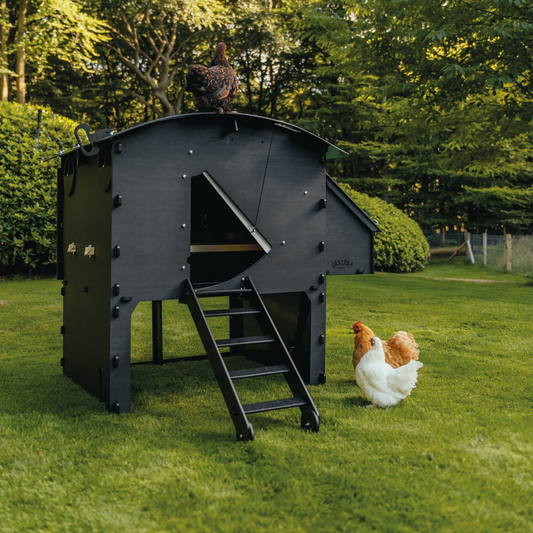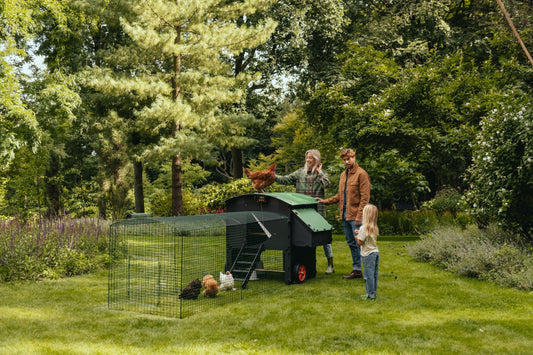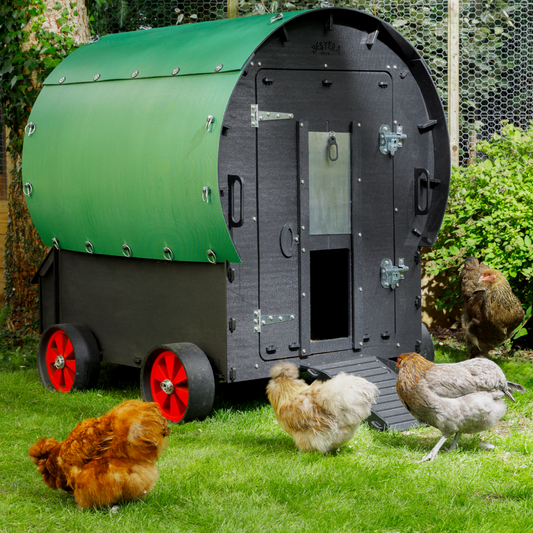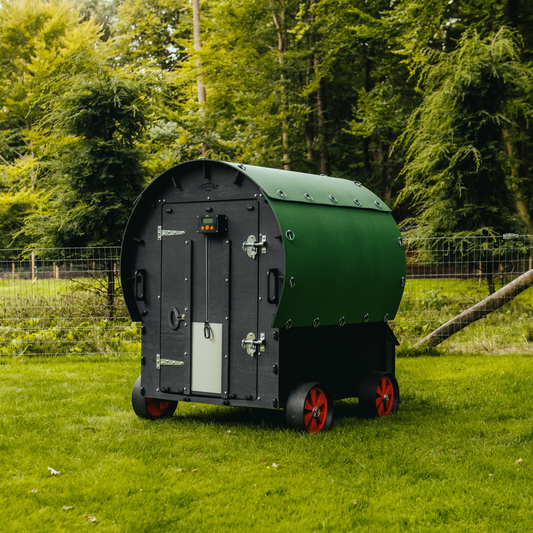
How big should a chicken coop be? As a general rule of thumb, allow around 1 sq ft (roughly 0.1 m²) of indoor coop floor per standard hen, plus about 8 inches (20–21 cm) of perch space each and shared access to a nest box. The bigger numbers really matter outdoors, in the run, where your hens spend almost all their waking hours.
Short answer: the coop only needs to be big enough for hens to roost and lay comfortably — about 1 sq ft of floor and 8 in of perch per bird — while generous run space (think 8–10+ sq ft per hen) is what truly keeps a flock healthy and happy.
That can sound surprisingly small if you have seen advice quoting 3 or 4 sq ft per bird inside the coop. Below we explain how much space chickens actually need, how to work out coop size for your flock, and how to spot the signs that your hens are too cramped. (These are welfare-based rules of thumb to guide your planning, not legal requirements — commercial standards differ from back-garden keeping.)
How much space do chickens need?
Chickens need two very different kinds of space: a small, secure, weatherproof coop for sleeping and laying, and a much larger run or free-range area for everything else. People often confuse the two and try to make the coop do both jobs, which leads to oversized, heavy, expensive houses that are hard to move and clean.
It helps to think of the coop as a bedroom rather than a whole house. Hens only use it to roost overnight and to lay their eggs. All their natural behaviours — stretching, flapping, preening, pecking, scratching, foraging, dust-bathing, running and jumping — happen outside. Give them room to do those things in the run and the indoor footprint can stay modest.
Chicken coop space per bird: coop floor, perch and nest box
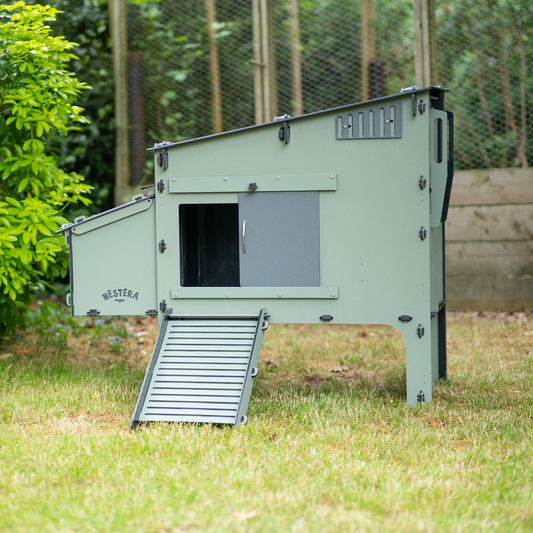
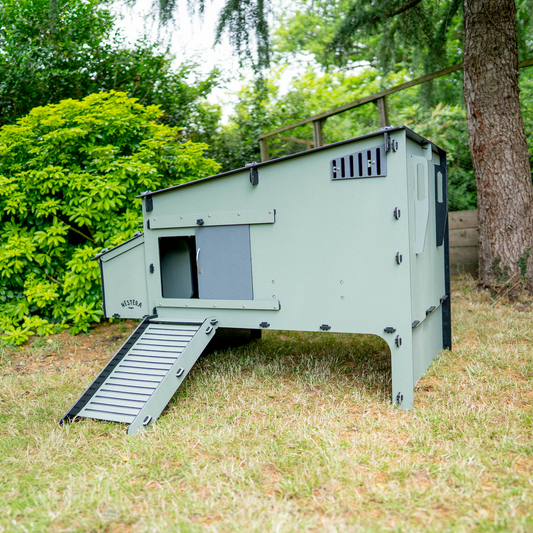
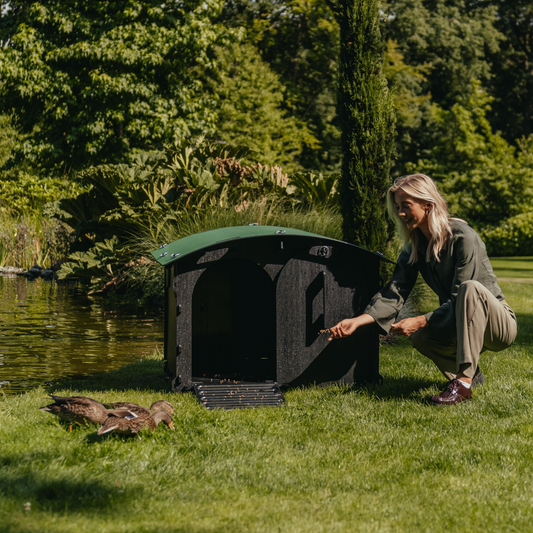
Here at Nestera, we design our recycled-plastic chicken coops around chicken welfare, using research into chicken physiology, behaviour and ergonomics. As a practical guideline for standard-sized laying hens, we work to:
- Coop floor space: about 1 sq ft (~0.1 m²) per hen for roosting room.
- Perch length: roughly 8 in (20–21 cm) of perch per hen so the whole flock can roost side by side without squabbling.
- Nest boxes: around one nest box per 3–4 hens — hens happily share and often queue for a favourite box, so you rarely need one each.
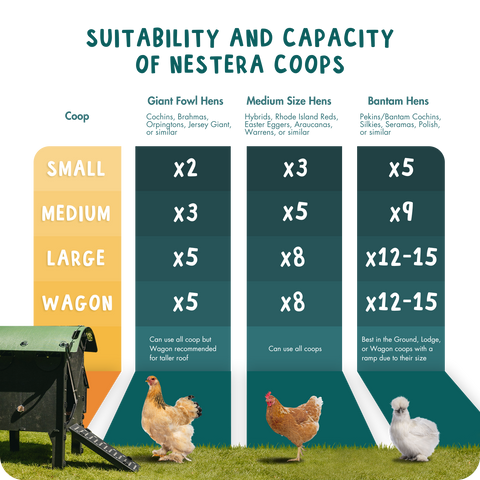
Adjust upwards for large or heavy breeds, and downwards for bantams. These figures are a starting point, not a rigid law — the goal is enough room for every hen to perch, turn and settle comfortably.
This may look smaller than you are used to, but there is method behind it. Because chickens only roost and lay inside, packing the indoor space with perches and nest boxes — then counting that area as “floor space” — is misleading. What counts is whether every bird can reach a perch and a nest box without crowding.
How much room do chickens need in the run?
Outdoor space is where you should be generous. As a rough guide, aim for at least 8–10 sq ft (about 1 m²) of run per hen, and more if the birds will be confined to the run for most of the day rather than free-ranging. The more space and enrichment outdoors, the calmer and healthier your flock.
A secure, predator-proof run lets hens forage and dust-bathe safely while keeping foxes and birds of prey out. You can pair any of our coops with a matching predator-proof run to give your flock that all-important outdoor room.

To invest wisely in your flock, spend on a high-quality, right-sized coop and a larger predator-proof run, rather than an oversized house. A big shed is harder to move, costly to build, and in winter a small coop where hens can huddle together actually stays warmer than a large one they have to heat with body warmth.
Signs your chicken coop is too small (overcrowding)
Overcrowding is one of the most common causes of stress and health problems in a backyard flock. Watch for these warning signs:
- Feather pecking and bullying — bare patches, picked-on hens, or birds that can’t escape an aggressor.
- Hens crowding the run and avoiding the coop, or competing fiercely for perch space at roosting time.
- Dirty, fast-soiling bedding and a persistent ammonia smell, which point to too many birds in too little air space.
- Eggs laid on the floor because nest boxes are blocked or too few.
- More squabbling, stress and parasite spread, as crowded conditions let red mite and lice move quickly between birds.
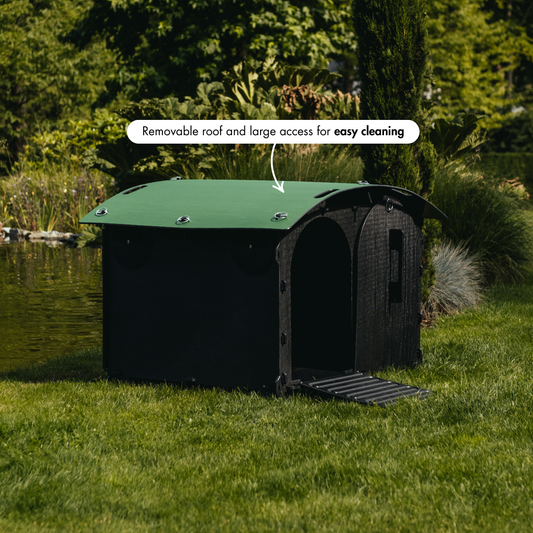
If you spot these, add run space first, then check your perch length and nest box ratio. Good ventilation and easy cleaning matter too — our smooth recycled-plastic coops have no timber cracks for red mite to hide in and several access points for quick cleaning. For more on keeping the coop healthy, see our guide to the best bedding for chicken coops.
Where to put the coop — and which coop to choose
Space isn’t only about square footage; placement affects how comfortable that space feels. A sheltered, well-drained, partly shaded spot helps hens use both coop and run year-round — see our guide on where is the best place for a chicken coop.
This article is about how much space your hens need for their welfare. If you’re instead trying to pick a specific model to buy for your flock size, read our companion guide: what size chicken coop do I need. The two work together — this one tells you the space targets, that one helps you choose the coop to meet them.
Frequently asked questions
How much space do chickens need per bird?
As a rule of thumb, about 1 sq ft (~0.1 m²) of indoor coop floor and 8 in (20–21 cm) of perch per standard hen, plus at least 8–10 sq ft of run space each. Outdoor space is the part that matters most for welfare.
How many chickens can fit in my coop?
Divide the usable coop floor area by roughly 1 sq ft per bird, then check there’s about 8 in of perch each and a nest box for every 3–4 hens. Our coops come in size variants for roughly 3–5, 5–9 and 8–15 hens to make this easy.
Is it better to have a bigger coop or a bigger run?
A bigger run. Hens only sleep and lay in the coop, so once the indoor space meets the per-bird perch and floor guidelines, extra money and space are far better spent on a larger, predator-proof run.
Can a chicken coop be too big?
It can be impractical — large coops are heavy, costly and hard to move and clean, and in cold weather hens stay warmer huddling in a snug coop than heating a big empty one. Aim for “right-sized” indoors and generous outdoors.
Give your flock the right space
Get the balance right — a snug, easy-clean coop plus a roomy run — and your hens will be calmer, healthier and more productive. Our recycled-plastic chicken coops are made from 70% recycled plastic, guaranteed up to 25 years depending on model, and come in size variants for 3–5, 5–9 and 8–15 hens. For a stylish option that also takes the solar Smart Auto Door, take a look at the Aspen chicken coop. Whatever size you choose, pair it with a generous run and your flock will thank you for it.